This website could be yours. gutterline.noahlot.com, this design, is a mockup for display purposes only. noah@noahlot.com
GUTTERLINESeamless Gutters · Independence, MO
(816) 555-0132 Call Dale

Most of what I tore out wasn’t worn out. It was rotted out, from the bottom up, and the gutter did it.

Twenty‑three years on roofing crews taught me that, and Gutterline is what I did about it. Seamless aluminum gutters, formed at your house, in the length your house actually is, hung on a line snapped at a quarter inch of fall per ten feet.

Dale Hooper, owner. Independence and the rest of the Kansas City metro. Licensed and insured, MO and KS.

Drawing of a long fascia board with a blue chalk line snapped along it, a chalk reel at the far end, and a dimension reading a quarter inch of fall per ten feet. 1/4″ of fall per 10 ft, every job, no exceptions
The line the company is named for. Snapped in blue on every fascia before a single hanger goes in.

Why a roofer sells gutters

Fascia rot is the cheapest expensive problem in this trade.

People ask why I left roofing. Because I got tired of replacing decking that a forty dollar downspout extension would have saved. Most of what I tore off houses was not worn out. It was rotted out, from the bottom edge up, and in almost every case a failed gutter delivered the water that did it.

A gutter that holds water is quiet about it. You will not see the problem from the driveway. You will see it in the paint bubbling under the eave three years later.

Here's the thing about how the rot starts: it is rarely the gutter leaking through. It is water overflowing an inch behind the back edge, running down the face of the fascia board, and sitting in the joint where fascia meets soffit. That joint never gets sun. It never dries. The board goes soft from the inside, the hangers lose their bite, the gutter sags, and now it overflows worse. The whole failure is one slow loop, and it is preventable at the first step.

The free fascia poke

Ten minutes and a pocket screwdriver, whether or not you ever buy a gutter from me. If the board is soft I will show you exactly where, photograph it, and tell you what it costs to fix now versus in five years. Ask me to poke your fascia. I mean it.
Cross-section of a roof eave showing shingles, drip edge, gutter, fascia board and soffit, with a blue dashed arrow tracing water overflowing the gutter's back edge, running down the fascia into the fascia and soffit joint where rot begins. shingles drip edge fascia gutter soffit water over the back edge rot starts in this joint
The slow loop. Water over the back edge, down the fascia, into the joint that never dries.
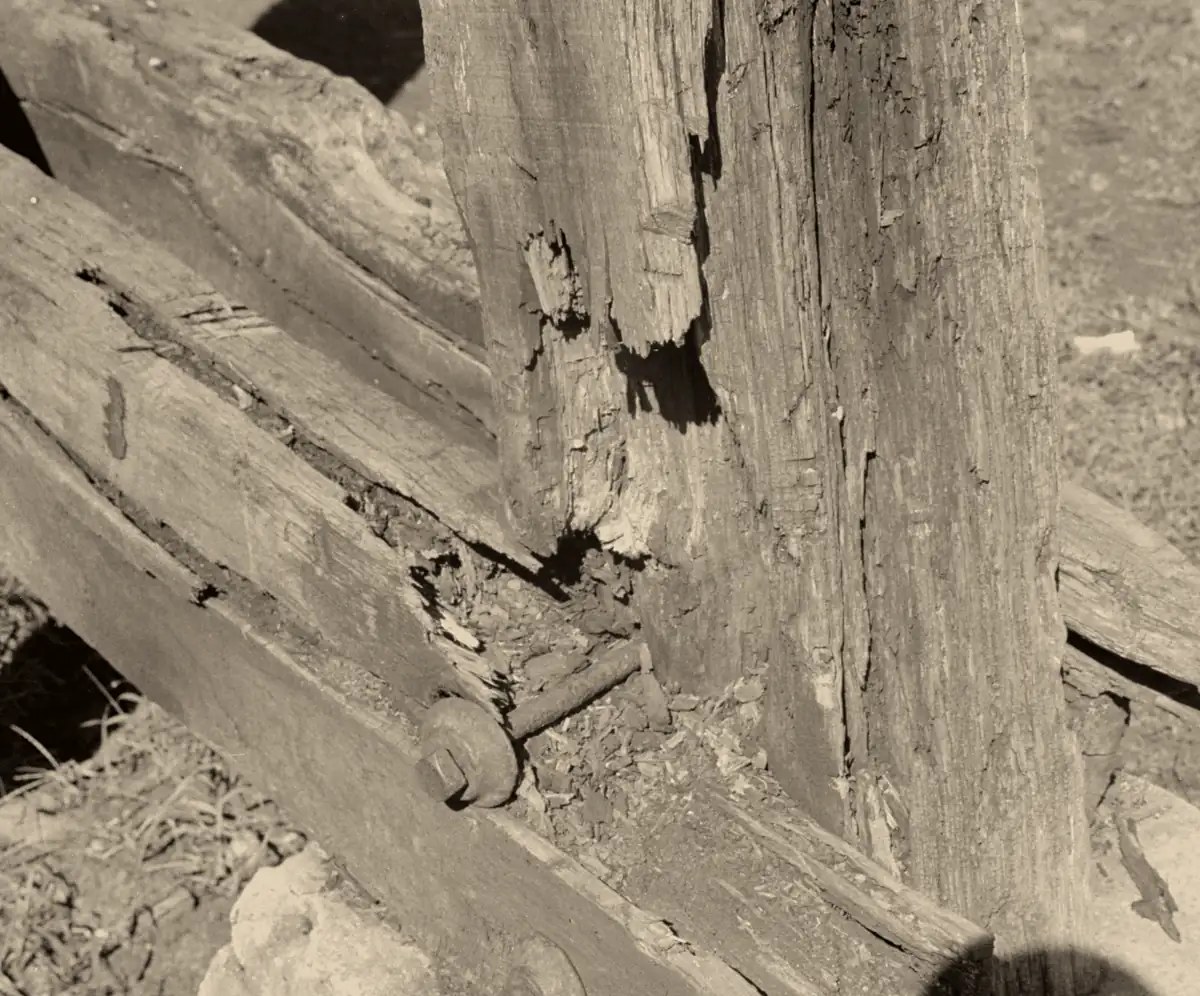
Archival photograph: a timber post split and crumbling where it meets a beam, the fibres peeling away in layers.
Not this client’s house. This is what soft wood looks like once water has had a few years at it. Ben Shahn, Rotting timber, Dobra, West Virginia, 1935.

How seamless works

Sixty-two feet, one piece, no seams. The machine does not care how long your house is.

A hardware store gutter comes in ten foot sticks, lapped together and sealed with caulk. Here's the thing about seams: caulk is a maintenance plan, not a repair. Aluminum moves when the temperature swings, and in Kansas City it swings a hundred degrees a year. Caulk does not move with it forever.

So the machine rides in the trailer and the gutter gets made in your driveway. Flat coil goes in one end, a finished K-style gutter comes out the other at about forty-five feet a minute, cut at your measurement. The only joints on the whole system are the corners and the downspout outlets, and those are riveted and sealed, not lapped. I run .032 gauge coil, the heavy option. You cannot tell .032 from .027 from the ground. You can when a ladder leans on one.

Bold cutaway diagram of a gutter roll-forming machine. Aluminum coil feeds through an entry guide and four pairs of forming rollers, past a shear, and exits as a finished K-style gutter. Below, the profile is shown flattening less at each stage until it becomes the finished shape. 1 2 3 4 5
  1. Coil. Flat .032 aluminum, factory finished. The paint goes on before the shape does, so there is nothing to peel. Almond or white covers about eight of ten houses in this metro, and I stock both on the truck so the job does not wait on a color.
  2. Entry guide. Squares the strip so the profile comes out true, not twisted.
  3. Forming stations. Four pairs of rollers, each bending the strip a little further. Gradual is the whole trick. One hard bend would crack the finish.
  4. Shear. A guillotine blade cuts the run at your measurement, mid profile, clean.
  5. Finished K-style gutter. The curled face you see from the street. Off the machine and onto the fascia the same hour.

Work and prices

The written number is the number.

  • 5″ seamless K-style

    The right size for most roofs in the metro. Hidden hangers screwed into the fascia every 24 inches, never spikes.

    $9.50 /ft installed

  • 6″ oversize

    For steep pitches, long valleys, and metal roofs that shed water faster than a five inch trough can take it. I will tell you honestly which one your roof needs, and I would rather lose a foot of pride than resize a gutter twice.

    $12.50 /ft installed

  • Downspouts

    2×3 or 3×4, matched to the gutter color, strapped every eight feet. The extensions are not an upsell, they come with the job. Water six feet from the foundation or I did not finish.

    $8 /ft

  • Gutter guards

    Aluminum micro mesh, screwed on, no adhesive. Here's the thing about guards: they do not make cleaning unnecessary, they make it rare. Anybody who says never is selling the mesh, not the truth.

    $18 /ft

  • Cleaning

    Scooped by hand, downspouts flushed until they run clear, debris bagged and hauled. I photograph anything I find that needs attention, including your fascia.

    $150 single story · $220 two story

  • Repair

    Sagging runs re-hung, pulled hangers replaced, leaking corners re-sealed, a downspout the wind took. Covers the trip and the first hour.

    $95 service call

$350 minimum on new installs. Every job is quoted in writing before any coil comes off the truck, and the written number is the number. Rain days are estimate days. The best time to look at a gutter is while it is failing.

How a job goes

Four steps, and you are welcome to watch all of them.

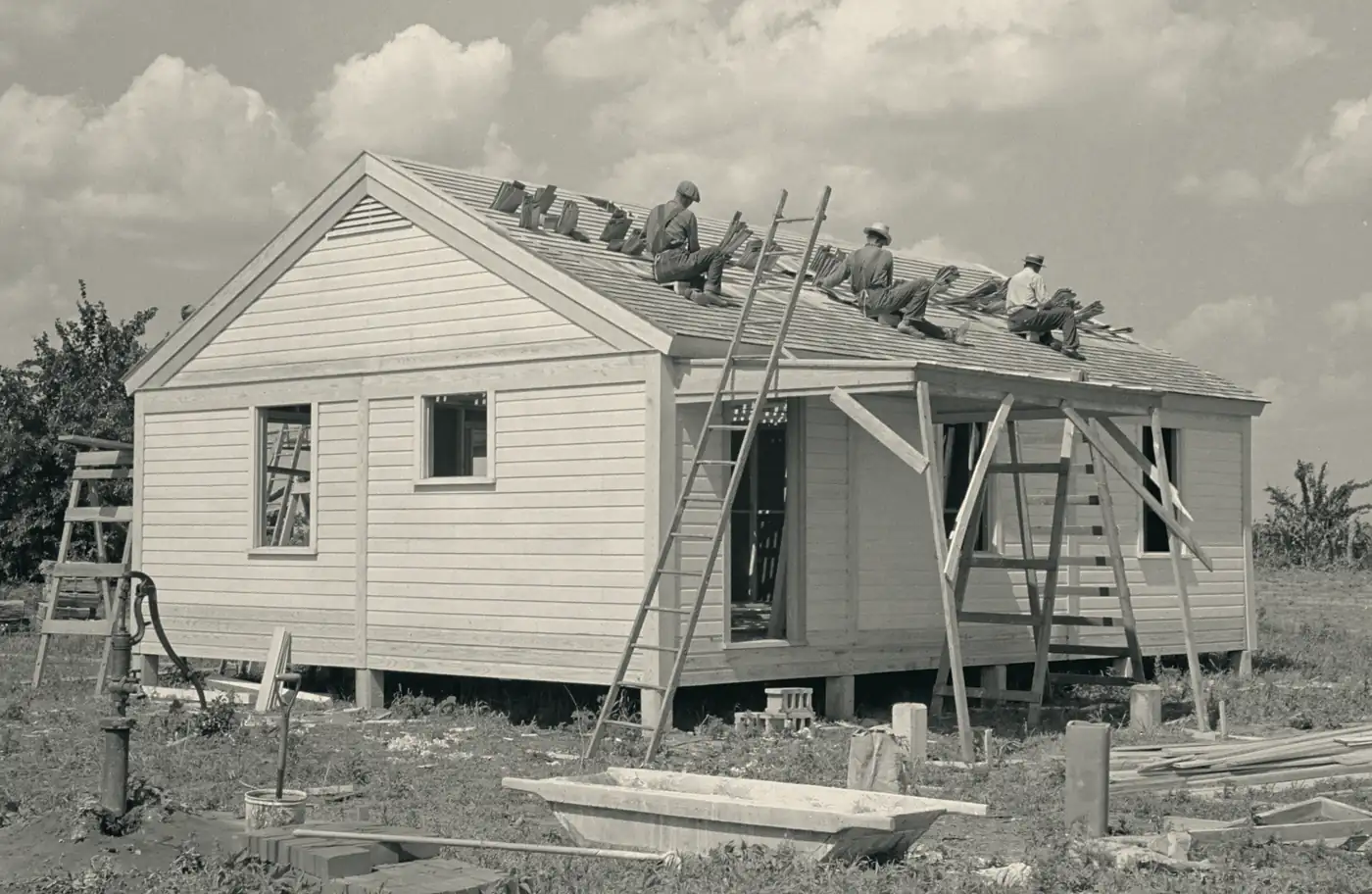
Archival photograph: three men laying shingles along the edge of a new house roof, a wooden ladder leaning against the eave.
Southeast Missouri, 1938. Not a Gutterline job, and eighty-odd years early, but the part of the work that matters has not moved. Somebody is up a ladder at the edge of the roof, getting the line right before anything gets fastened to it. Russell Lee, Southeast Missouri Farms Project. House erection. Roofing over shingle lath with wood shingles, 1938.
  1. 1

    Measure, and poke the fascia.

    Every run gets measured to the inch, and every board gets the screwdriver before a hanger goes into it. A gutter hung on soft wood is a gutter on the ground in three winters. If a board needs replacing, that goes in the written quote, not in a surprise call from your roof.

  2. 2

    Snap the line.

    Blue chalk, a quarter inch of fall per ten feet, running toward the downspout. That line is the whole company, honestly. Everything after it is just following it.

  3. 3

    Run the machine.

    The coil comes off the truck and your gutter comes out of the trailer in one piece, at the exact length of your fascia. A sixty foot run of fascia gets one sixty foot gutter.

  4. 4

    The hose test.

    Before I leave, a garden hose goes in the highest corner and you stand at the downspout and watch it run clear. Not because I doubt the line. Because you should not have to wait for the first storm to find out whether your contractor was right.

What people say, and what Dale says back

He answers every review himself. Kayla refuses to edit them.

“Dale spent forty five minutes explaining my own roof to me and then charged me less than the other two quotes. The gutters look like they grew there. He also found a soft spot on the fascia by the garage that nobody else even looked at.”

Carol M., Blue Springs

Reply from the owner

Thank you, Carol. Tell your neighbor I will come poke at her fascia for free, it takes ten minutes and a screwdriver.

“Crew was in and out in a morning. The downspout dumps way out by the fence now instead of next to the basement window, which I did not even ask for.”

Mike R., Raytown

Reply from the owner

Appreciate it, Mike. And for anybody reading this, the downspout extensions are not an upsell, they come with the job. Water six feet from the foundation or I did not finish.

“I thought I needed the bigger gutter on the back valley and Dale talked himself into agreeing with me after getting on the roof. Honest guy. Hose test at the end was a nice touch.”

G. Padgett, Lee’s Summit

Reply from the owner

Thanks, Mr. Padgett. You were right about that valley, it needed the six inch. I would rather lose a foot of pride than resize a gutter twice.

Talk to Dale

Here’s the thing: water always wins eventually.

My whole job is making sure it wins somewhere that does not matter. Call, tell me your address and what the water is doing, and I will come look. Estimates are free and so is the fascia poke.

(816) 555‑0132

Monday to Saturday, 7 to 6. Storm weeks run later, and I apologize in advance about the callback time when half the metro loses a downspout on the same night.

If you get the voicemail

“You’ve reached Dale at Gutterline. I’m probably up a ladder. Leave your address and what the water’s doing, and I’ll call you back tonight after supper.”

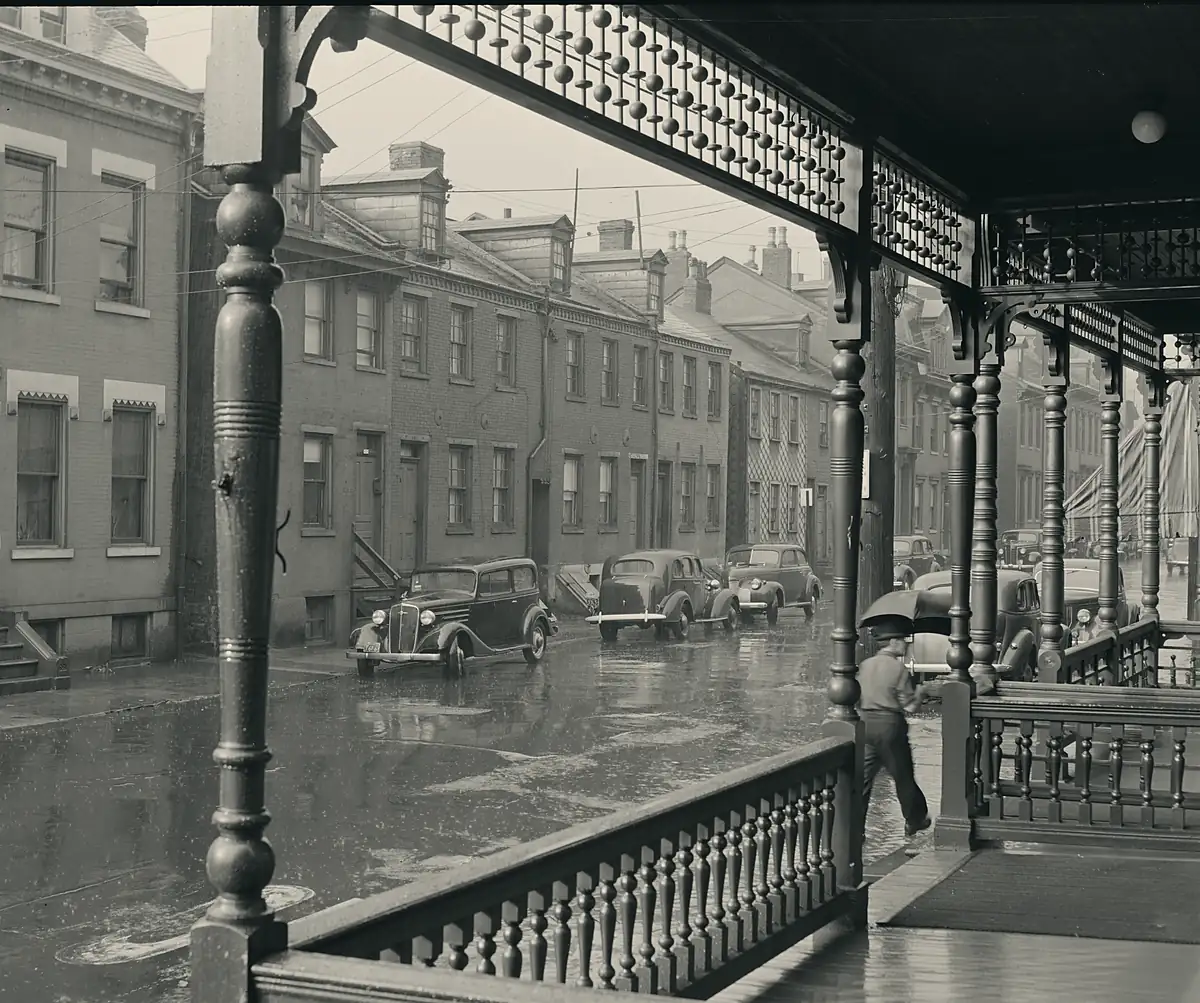
Archival photograph: a wet street in heavy rain seen from a covered porch, water running off the roof edge above.
Rain days are estimate days. The best time to look at a gutter is while it is failing. John Vachon, Rain. Pittsburgh, Pennsylvania, 1941.

Where I’ll come look

  • Independence
  • Blue Springs
  • Raytown
  • Lee’s Summit
  • Grain Valley
  • Sugar Creek
  • Kansas City, MO
  • Liberty
  • Gladstone
  • Overland Park, KS
  • Olathe, KS
  • Shawnee, KS

Farther out is usually fine on install work. The machine travels well. Ask.